In This Article
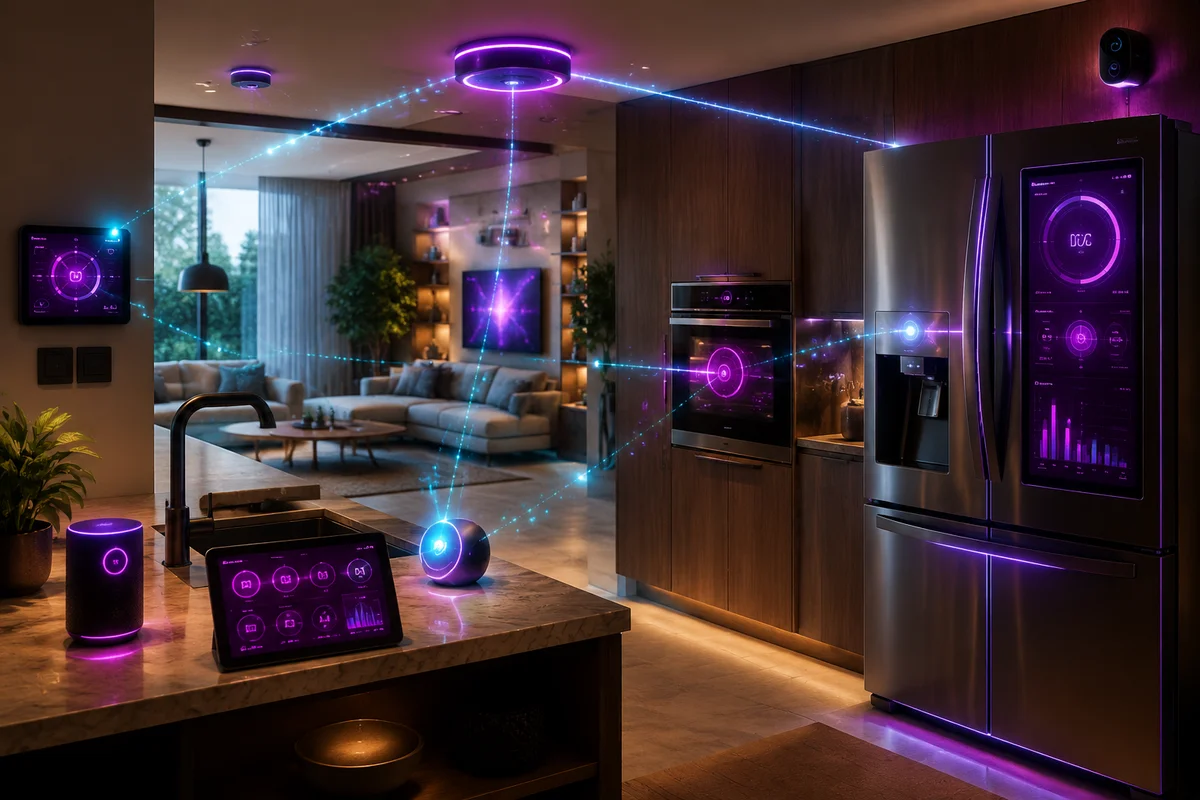
Today's homes host a growing number of electrical appliances that, without any connectivity or coordination, make managing energy use and remote control difficult. By connecting home appliances to one integrated platform, IoT gives residents smart control, automatic scheduling, and lower electricity bills. This article covers the core components of a smart home and the practical applications of smartifying home appliances.
Key Takeaways
- Remote control of home appliances through a mobile app
- Reduced energy consumption via automatic scheduling and usage-pattern detection
- Improved home safety with automatic gas- or water-leak alerts
- Unified control of every home appliance from a single dashboard
The Challenges of Managing Appliances in a Traditional Home
In many homes, whether appliances like the AC, heater or washing machine are on or off can only be checked when residents are actually there. That wastes energy while the home is empty and reduces the ability to react quickly to events like a water or gas leak.
On top of that, without a unified view of each device's consumption, it's hard for residents to identify power-hungry appliances and plan ways to cut their electricity bill.
Components of a Smart Home Platform
A smart home platform is built from three core layers: a layer of smart outlets and modules connected to home appliances, a data-transfer layer over the home's wireless network, and a software layer that gives residents control and monitoring through a mobile app.
- Smart outlets and switches for remote control of electrical appliances
- Temperature, humidity and gas/water-leak sensors to improve home safety
- A centralized mobile app for viewing each device's status and energy use
Smart Control & Monitoring of Home Appliances
By connecting appliances like the AC, water heater and washing machine to an IoT platform, each device's on/off status and consumption become visible in real time. This continuous monitoring enables automatic scheduling of when devices turn on and off, based on time of day or usage patterns, and helps noticeably lower the electricity bill.
Key Applications & Benefits
- Remote control of home lighting, cooling and heating via a mobile app
- Automatic scheduling for turning appliances on and off to save energy
- Instant alerts for gas, water or smoke detected in the home
- Energy-consumption reports per device to identify power-hungry appliances
Summary & the Road Ahead
Smartifying home appliances is a gradual process that can start with one or a few power-hungry devices and expand over time to the entire home. By designing a comprehensive, home-grown IoT platform for the smart home, DanialMoj is ready to deliver a dedicated, practical solution tailored to each home or residential complex's real needs.
Frequently Asked Questions
What exactly does smartifying home appliances mean?
Does smartifying a home require rewiring or infrastructure changes?
How does smartification affect a home's electricity use?
What does smartification cost for an average home or apartment?
Want to find out how DanialMoj's IoT platform can be designed to smartify your home or residential complex?
Request a Free ConsultationRelated Articles
Smart Home
Automating lighting, security and energy use at home with smart, reliable communication protocols.
Read Article
Street Lighting
Smart control of street lights to cut power consumption and improve road safety at night.
Read Article
Smart Hotel Management
Smart hotel management uses IoT, room automation and data analysis to improve guest experience, energy management and staff productivity.
Read Article
Smartifying Retail Chains
Centralized management of inventory, energy and branch security with integrated communication networks across retail chains.
Read Article