In This Article
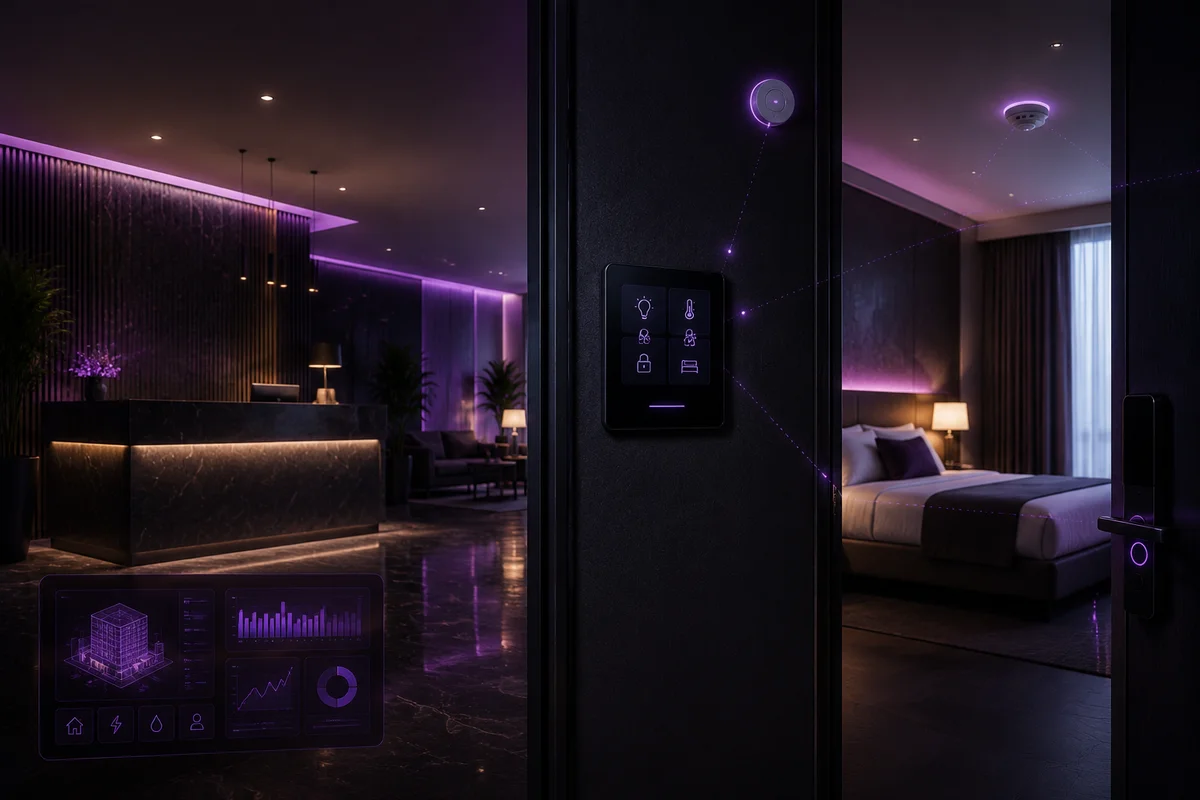
The hotel industry is changing fast, and today's guests are looking for personalized services tailored exactly to their needs. By connecting lighting, cooling and heating systems, door locks, guest services and security into one integrated IoT platform, smart hotel management makes this level of personalization possible — while simultaneously cutting energy use and boosting staff productivity. This article covers the main applications of IoT in the hotel industry.
Key Takeaways
- Smart control of room lighting, temperature and curtains based on guest presence and preferences
- Easy requests for housekeeping, laundry and emergency assistance through a smart panel
- A noticeable drop in energy use through occupancy sensors and smart facility automation
- Early identification of maintenance issues before they turn into costly damage
Why Smart Hotel Management Matters
Hotels generate a huge volume of data every day about guest preferences, behavior and needs — data that goes unused without the right platform. By connecting real-time location data with guest preferences and behavior, IoT enables fully personalized service at every stage of a guest's journey, from a personal welcome to smart loyalty programs.
On top of that, one of hoteliers' main concerns is cutting energy use. When lighting, heating and cooling systems operate smartly, energy waste drops to a minimum and the hotel's operating costs fall.
Smart Control of Guest Rooms
Interior room functions are controlled through smart systems that make a stay feel more like being at home.
- A smart lighting system based on occupancy sensors and preset scenarios, such as a movie-watching mode
- A ventilation system that activates automatically in the presence of pollution or an unpleasant odor
- A cooling and heating system that manages room temperature based on presets or guest requests
- A touch panel or smartphone control for managing curtains, the TV and other equipment
Guest Communication via Messaging & Smart Wristbands
Through a smart in-suite panel or the hotel's app, guests can send requests — including room cleaning, laundry, an emergency alert and checkout notification — directly to the front desk for the fastest possible response. Smart wristbands also double as a room key, a payment method, and a way to track guest behavior in areas such as the restaurant, pool and gym, enabling a personalized welcome.
Other IoT Applications in Hotels
- Real-time tracking of hotel staff for a faster response to guest requests
- Online smart-parking reservations before a guest even arrives at the hotel
- Smart restaurants with digital ordering and smart food-inventory management
- Smartifying green spaces, the pool, and the hotel's fire-alarm and suppression system
Benefits of Smartification for Hoteliers
Fitting guest rooms with IoT equipment and monitoring it through a single integrated platform goes a long way toward catching maintenance issues before they turn into costly damage; for example, early detection of a water leak can prevent serious harm to floors and ceilings. By designing a comprehensive, home-grown IoT platform for the hotel industry, DanialMoj implements these capabilities to fit each hotel or hospitality group's real needs.
Frequently Asked Questions
What exactly does smart hotel management mean?
How do guests interact with smart room equipment?
What impact does IoT have on a hotel's energy management?
Does hotel smartification require a full building renovation?
Want to find out how DanialMoj's smart hotel platform can be designed for your hotel or hospitality group?
Request a Free ConsultationRelated Articles
Smart Firefighting
The role of smart sensors and AI in fast fire detection and emergency response management.
Read Article
Smart Retail Chain
How IoT improves customer experience and enables smart management of retail chains.
Read Article
Smart City
Integrating urban infrastructure with IIoT platforms for better management of city resources and services.
Read Article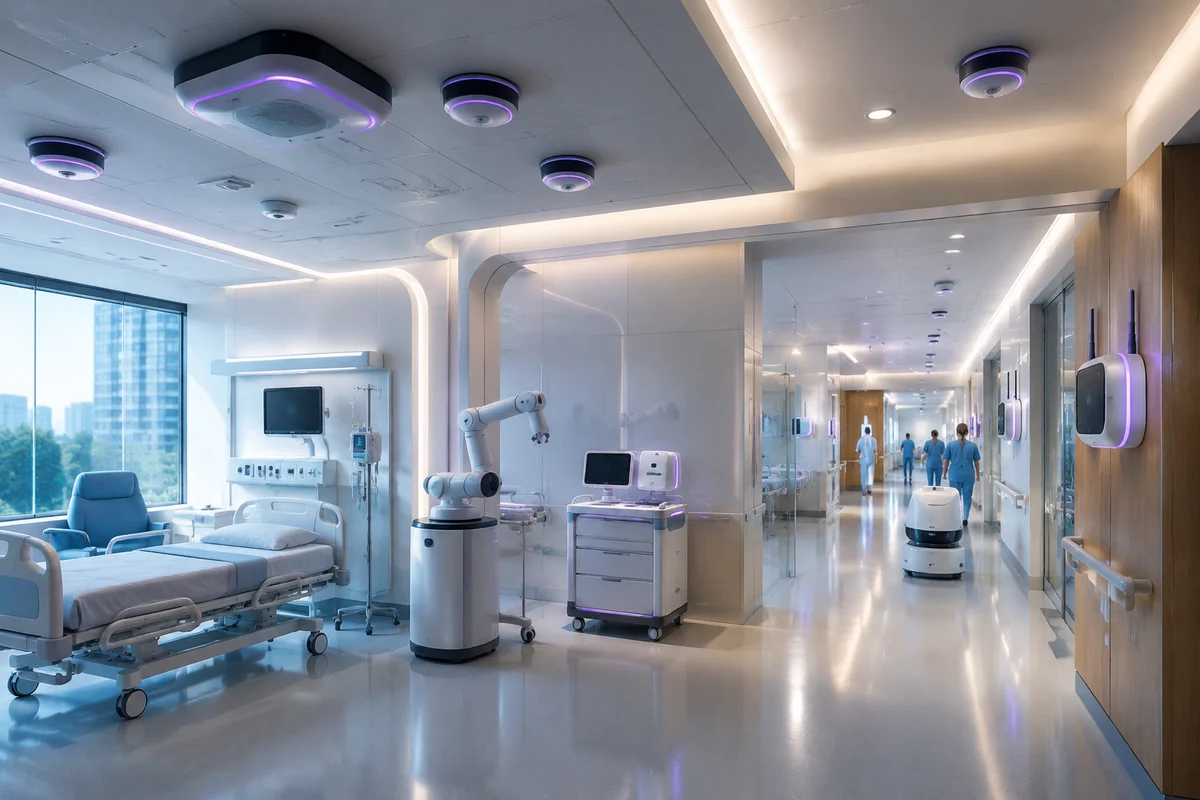
Smart Hospital
How IoT and industrial sensors are transforming medical-equipment monitoring and hospital energy management.
Read Article