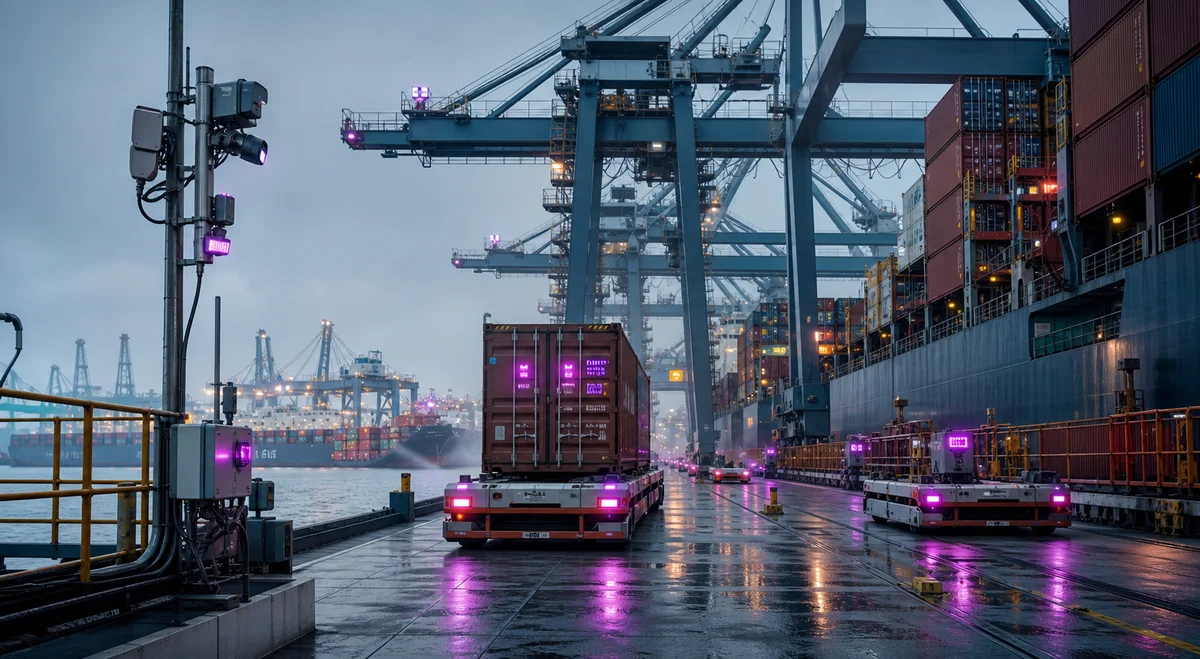
In This Article
Today's ports manage a massive volume of containers, vessels and operational data every day — a process that easily runs into delays, human error and wasted resources without the right tools. By connecting sensors, port equipment and customs systems into one integrated platform, Industrial IoT (IIoT) enables real-time container tracking, data-driven decision-making, and greater safety in maritime operations. This article covers the core components of a smart port and its practical applications.
Key Takeaways
- Real-time tracking of containers and cargo with RFID and GPS technology
- Cutting terminal lighting energy use by up to 80% through smart automation
- Improved port security through smart analysis of CCTV footage
- Integrating customs, dock and traffic data on a single dashboard
The Challenges of Traditional Ports & the Maritime Supply Chain
At many ports, logging container entry and exit and issuing cargo documents is still done manually, on paper. This method slows down cargo clearance and raises the odds of a mismatch between the bill of lading and the actual shipment.
On top of that, truck-traffic congestion at port entrances and exits, together with a lack of real-time visibility into the exact location of full and empty containers in the yard, makes loading and unloading planning difficult for terminal operators and leads to cargo backing up at the port.
Key Technologies for Port Smartification
RFID technology, by fitting radio-identification tags to containers, trucks and equipment, enables automatic logging of every object's entry and exit at the port gate and tracks its location at every moment. This technology also automatically verifies that a container's actual contents match its bill-of-lading documents.
- Automatic control of cargo entry and exit at port gates
- Precise tracking of container and equipment location on the docks
- Instant verification of container contents against bill-of-lading documents
Alongside RFID, GIS and GPS systems, by combining location data with satellite maps, enable choosing the best route for vessels entering the port, planning dock assignments, and managing unloading capacity. Advanced ports that have implemented networked GIS have been able to turn monitoring of their sensitive areas into live, accessible maps.
Smart Containers & Cargo Tracking
Container monitoring involves three main concerns: making sure cargo stays intact, maintaining container integrity along the route, and ensuring it's delivered to the right destination. Waterproof, GPS-equipped trackers mounted directly on the container, with no wiring required, enable real-time position monitoring and issue an alert if the container leaves a defined boundary.
For sensitive shipments such as pharmaceuticals and food, smart refrigerated containers equipped with temperature and humidity sensors connect to a central system, and if temperature approaches a critical threshold, they automatically activate cooling or alert the handler.
- An inductive sensor to confirm the container is properly locked to the truck
- A photoelectric sensor for automatically detecting container size
- A waterproof GPS tracker with a long-life battery and quick-install capability
Safety, Security & Energy Management
Smart analysis of CCTV footage using machine learning identifies unusual patterns in people's and vehicles' behavior and alerts security staff before an incident happens. Weight sensors installed in the pavement of transit roads also enable automatic checking of heavy trucks' weight and bill of lading to prevent cargo smuggling.
On the energy side, smart terminal lighting systems that turn on only when a vehicle is detected can save up to 80% on electricity use and pay back their investment cost within roughly two years.
Summary & the Road Ahead
Port smartification can start with a single terminal or a specific type of equipment and expand over time to the entire facility. By designing a comprehensive, home-grown IoT platform for smart ports and airports, DanialMoj is ready to deliver a dedicated, secure, practical solution tailored to each port's or terminal's real needs.
Frequently Asked Questions
What exactly does 'smart port' mean?
What technologies are used in port smartification?
Does port smartification require major infrastructure changes?
What's the main benefit of a smart port for port operators?
Want to find out how DanialMoj's IoT platform can be designed for your port or terminal?
Request a Free ConsultationRelated Articles
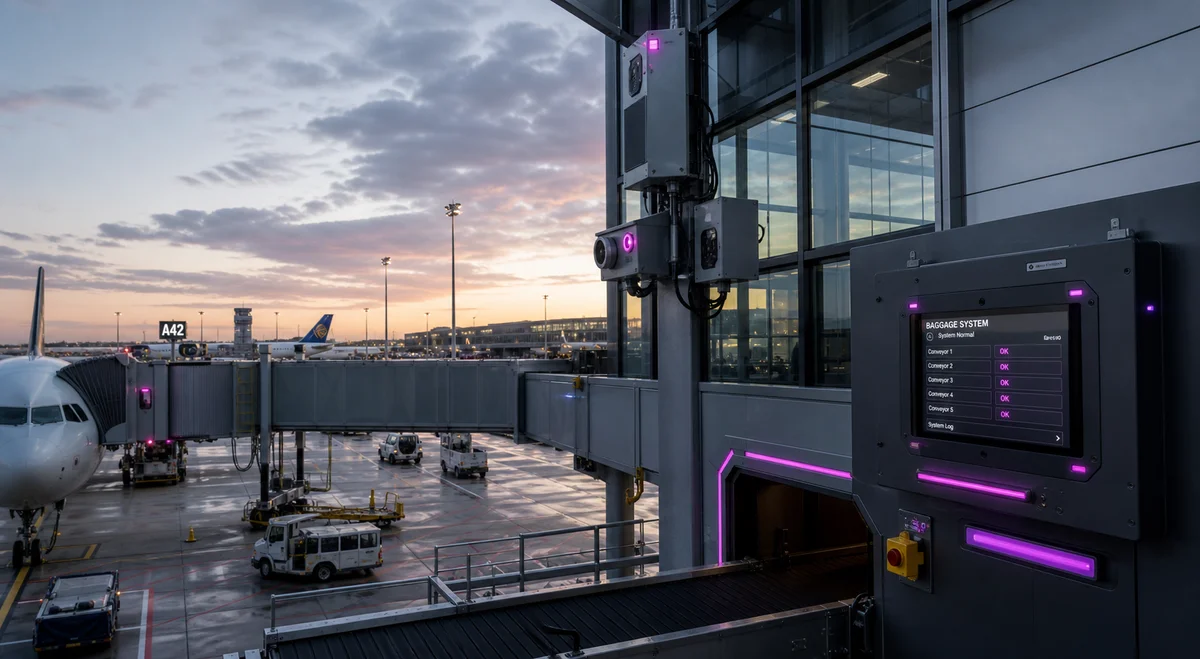
Smart Airport
Smart baggage and passenger tracking, equipment monitoring and improved flight-operation safety with industrial communication infrastructure.
Read Article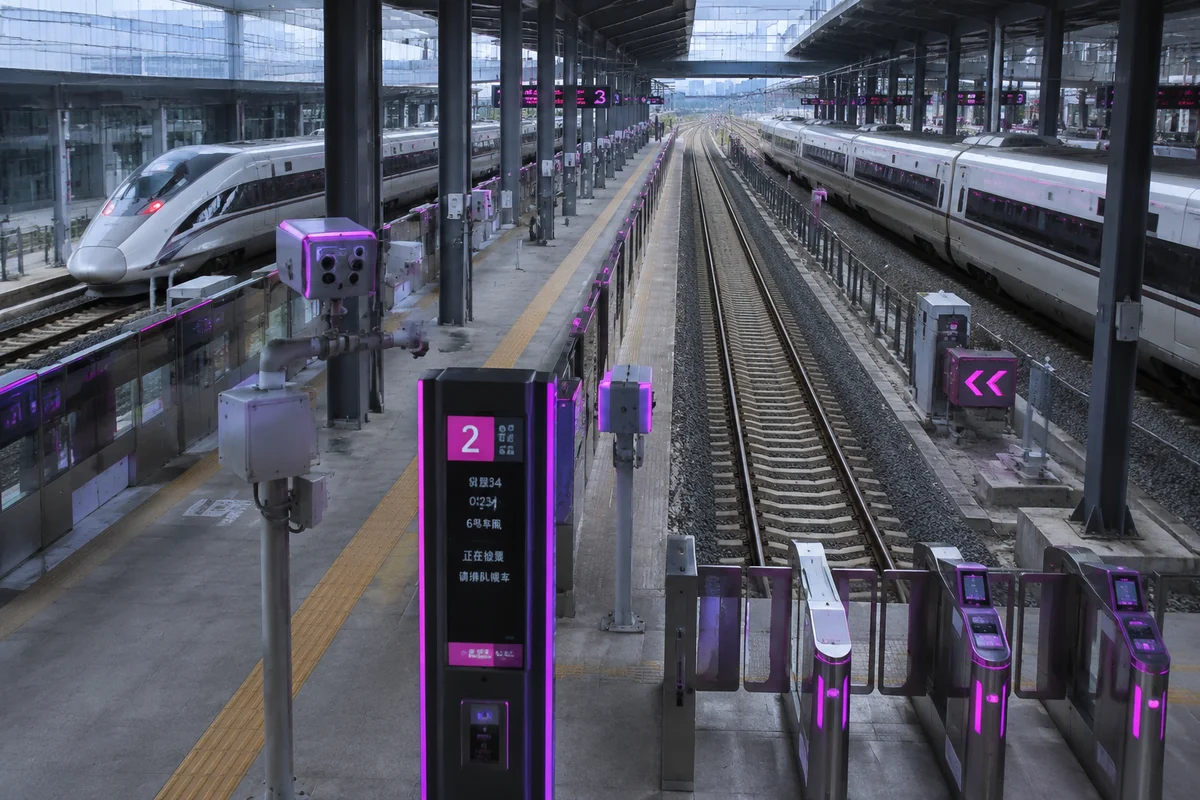
Smart Railway
Monitoring track condition, rail telecommunications and smart signaling systems to improve rail transport safety.
Read Article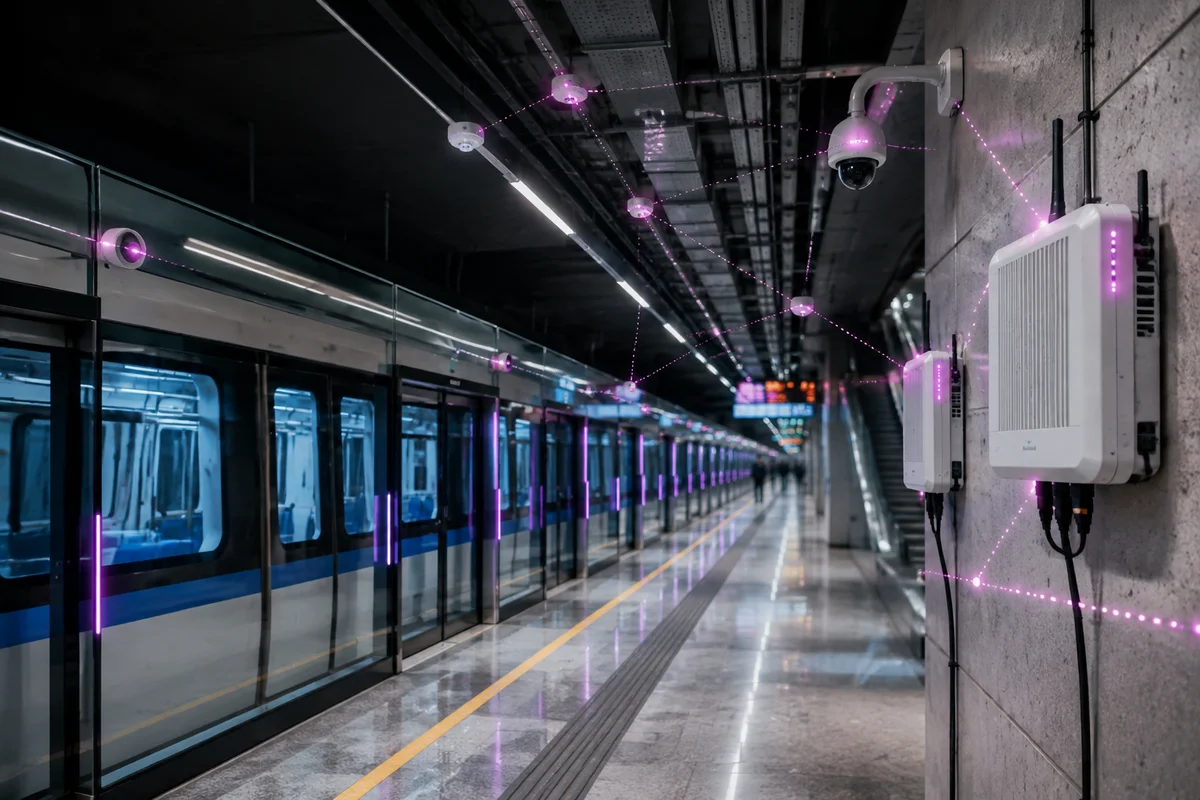
Smart Subway
Industrial telecommunications and monitoring systems to improve safety and scheduling accuracy across the subway network.
Read Article
Smart City
Integrating urban infrastructure with IIoT platforms for better management of city resources and services.
Read Article