In This Article
As a controlled-environment approach to agriculture, greenhouses create the right conditions for optimal cultivation — yet many growers fall short of expected yields because they can't precisely monitor factors like light, temperature, humidity and ventilation in real time. By connecting environmental sensors, a weather station, and irrigation and ventilation actuators into one integrated platform, IoT reduces human intervention, increases accuracy, and enables data-driven decision-making for growers. This article covers the core components of a smart greenhouse and its practical applications.
Key Takeaways
- Real-time monitoring of temperature, humidity, light and CO2 with internal sensors and an external weather station
- Cutting water use by 50 to 80% with automatic irrigation and fertigation based on actual plant needs
- Early warning for pests, fungal disease, and security events such as a greenhouse door left open
- Remote control and visibility over every greenhouse parameter via a dashboard and smartphone
The Challenges of Traditional Greenhouses
In traditional greenhouses, environmental parameters are managed through manual control mechanisms that often lead to reduced crop yields, wasted energy and higher labor costs. Temperature running higher or lower than needed, excess humidity and crop transpiration, water-vapor buildup, and evaporation from moist soil are among the main challenges these greenhouses face.
Under this approach, the grower has to spend a large part of the day physically present in the greenhouse to carry out tasks manually, which raises the chance of human error. With greenhouse smartification, constant physical presence is no longer necessary — smart gadgets are present in the greenhouse, control happens remotely via smartphone, and the error rate drops sharply.
Components & Equipment of a Smart Greenhouse
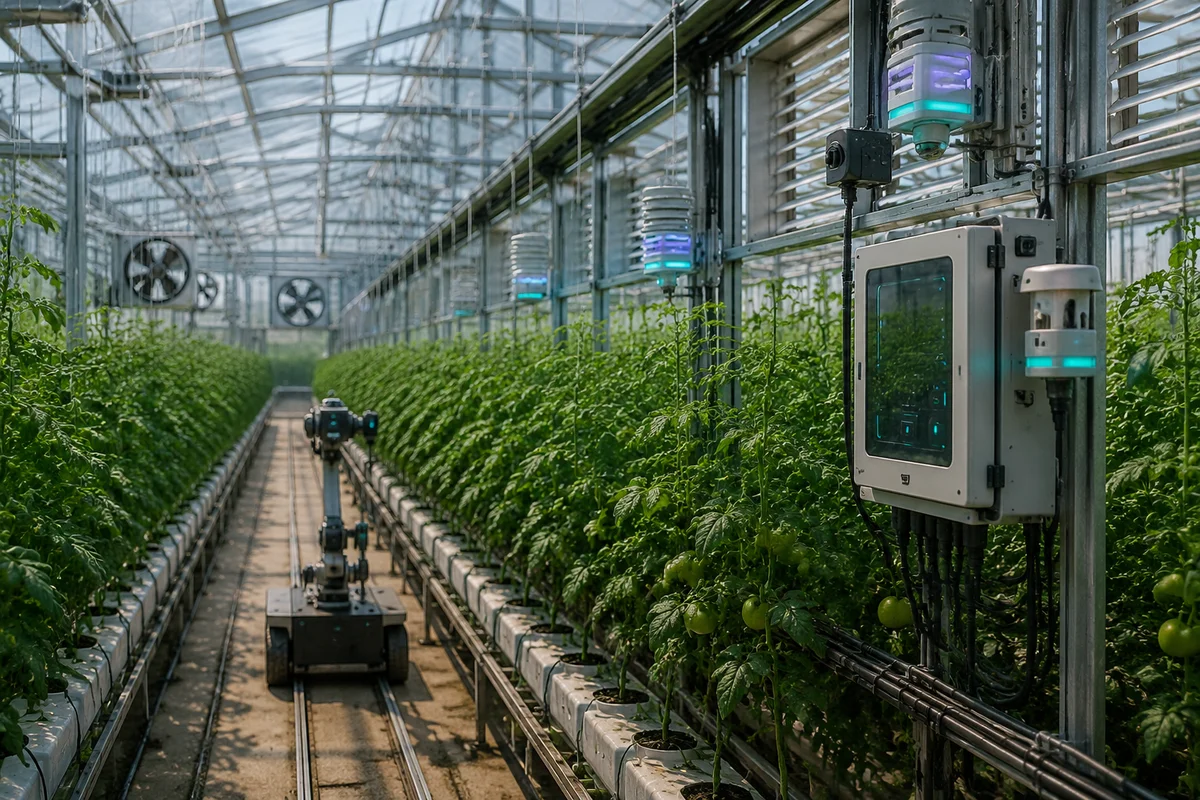
A smart greenhouse uses a large number of sensors, all connected to an IoT platform. These sensors, via an internal and external weather station, monitor factors such as temperature, humidity, electrical conductivity, pH, CO2 concentration, fog level and outdoor weather conditions, and send the data to a control center so actuators can respond according to the defined setpoints.
- Water pumps, water and fertilizer tanks, fertilizer-injection pumps and solenoid valves for automated fertigation and irrigation
- Internal climate-control sensors covering humidity, temperature, greenhouse gases, light and soil moisture
- Heating/cooling sensors, windows and variable-speed fans for regulating internal temperature
- Control sensors for LED lamps, shading systems and misting units to manage internal light and humidity
IoT Applications in the Greenhouse
One of IoT's key applications is preventing pest damage to plants: by analyzing weather and soil data, growers gain valuable insight into the risk of pests and fungal disease and can cut chemical-pesticide use to a minimum. Alongside that, IoT sensors can serve as a cost-effective alternative to CCTV cameras, monitoring the greenhouse door's status, detecting suspicious activity and alerting the greenhouse owner.
Improving irrigation and fertigation methods is another major application of this technology; smart sensors measure the volume and salinity of water in the soil to determine whether a plant is under water stress or needs fertilizing, and the system can activate automatically based on this data.
Key Benefits of a Smart Greenhouse
- Protecting valuable plants from extreme temperature swings with remote-control systems
- Significant water savings, cutting use by 50 to 80% compared with traditional methods
- Growing several crop types simultaneously and using vertical, layered production for optimal use of space
- Providing the light spectrum plants need year-round, even during low-light months
Summary & the Road Ahead
In a smart greenhouse, humidity, temperature, ventilation and CO2 levels are fully under control, and the degree of automation can be adjusted anywhere from manual control to fully automated scenarios. Collecting information, analyzing data, making management decisions and acting on that data form the core stages of a smart greenhouse. By designing a comprehensive, home-grown IoT platform customizable for the greenhouse industry, DanialMoj is ready to deliver a dedicated, practical solution tailored to each grower's real needs.
Frequently Asked Questions
What exactly does 'smart greenhouse' mean?
Does greenhouse smartification require a complete infrastructure overhaul?
How much water does a smart greenhouse save?
What does implementation cost for a medium-sized greenhouse?
Want to find out how DanialMoj's IoT platform can be designed for your greenhouse?
Request a Free ConsultationRelated Articles
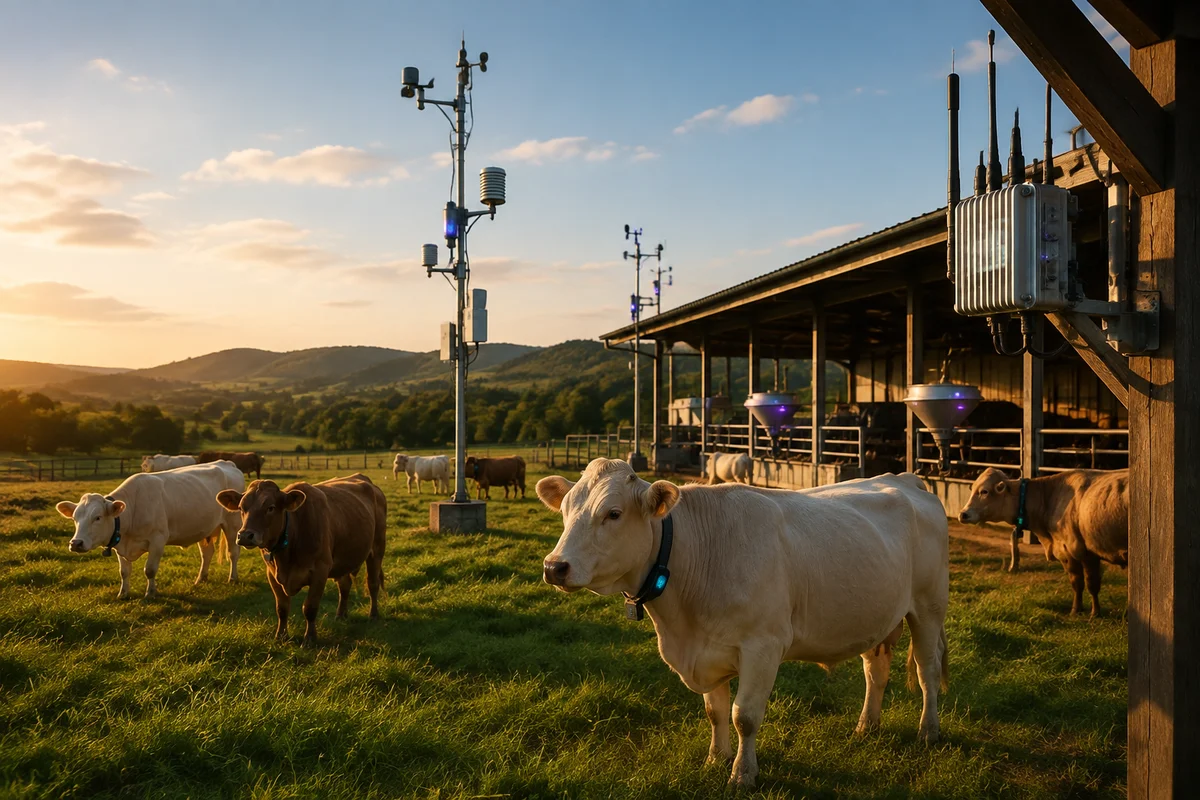
Smart Animal Husbandry
Smart livestock tracking, health monitoring and herd location via sensors and RFID tags to boost livestock productivity.
Read Article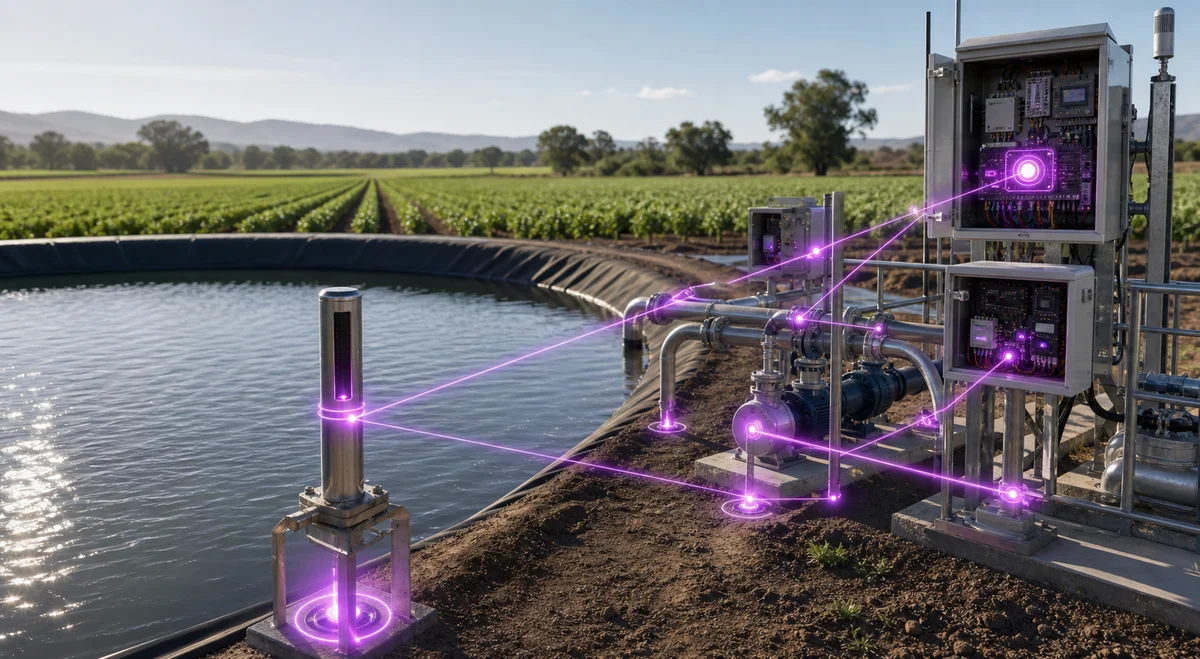
Smart Irrigation Reservoirs
Monitoring water levels, controlling pumps and smart reservoir management for more efficient use of water resources.
Read Article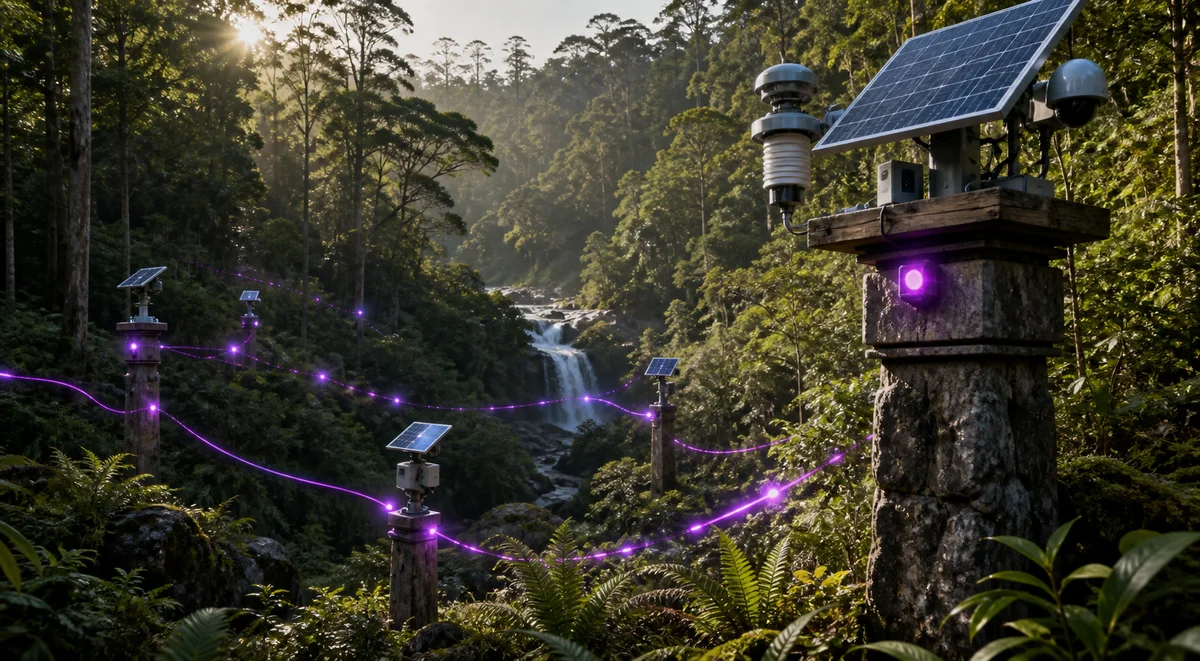
Environmental Smartification
Real-time monitoring of pollutants and natural resources with smart sensor networks for better environmental protection.
Read Article
Native IoT Platform
Native platforms built on local expertise, infrastructure and requirements deliver a secure, scalable solution tailored to domestic organizations and industries.
Read Article